The Modist
Luxury Marketplace Relaunch & System Redesign
Lead UX & UI Designer · Responsive Web · Marketplace Architecture · Design System
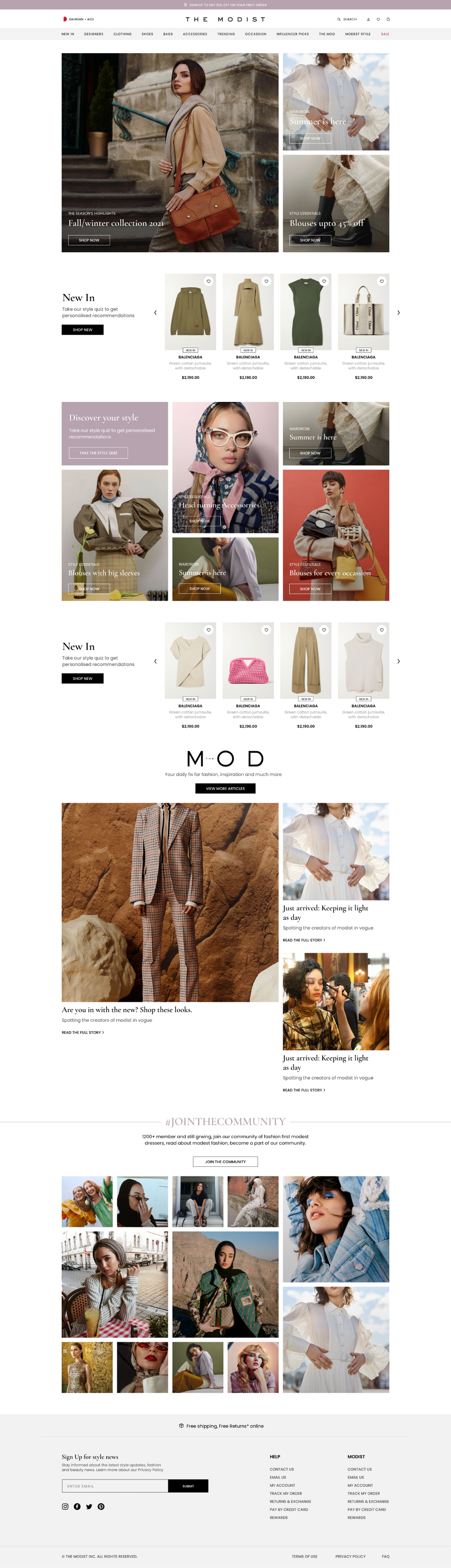
Relaunching a Brand Through Structural Change
The Modist was originally known for customising luxury garments to make them modest by altering silhouettes in collaboration with high-end brands. While this differentiated the platform, it required warehousing inventory and managing complex logistics. The model proved unsustainable during COVID.
The relaunch introduced a fundamental shift:
From customisation to curation.
Instead of modifying garments, The Modist would operate as a curated luxury aggregator for modest fashion by connecting global brands and their sellers directly to customers, removing warehousing, and simplifying logistics.
However, this shift introduced a new challenge:
How do you introduce a multi-vendor marketplace (like Amazon) into a luxury fashion platform while maintaining a calm and editorial visual language?
Understanding the User
The target audience remained consistent with the earlier business model, i.e. women in the Middle East seeking modest, modern luxury fashion who have strong purchasing power. Through stakeholder conversations and competitive analysis, we identified three primary personas representing the platform’s audience:
1. The power dresser who is seeking authority through wardrobe precision
2. The explorer who is navigating identity and status through fashion
3. The trend-driven digital native who is influenced by social visibility
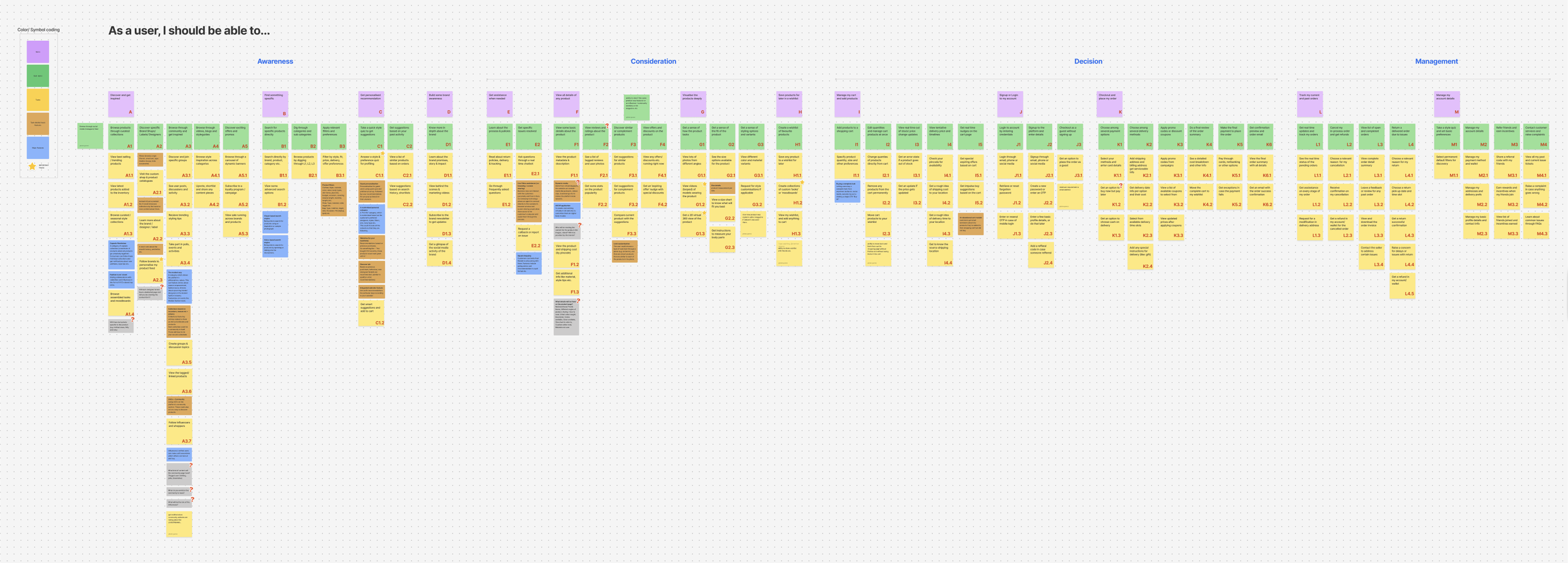
Mapping these personas across the full user journey, from discovery to post-purchase management, revealed recurring friction points. The product density often felt overwhelming, which could be worked on through introducing different filters and discovery channels. The customers need a simple and extremely intuitive checkout flow
Rebuilding the Information Architecture
The shift from customisation to curation required more than visual redesign. It demanded a structural rethinking of how the platform functioned.
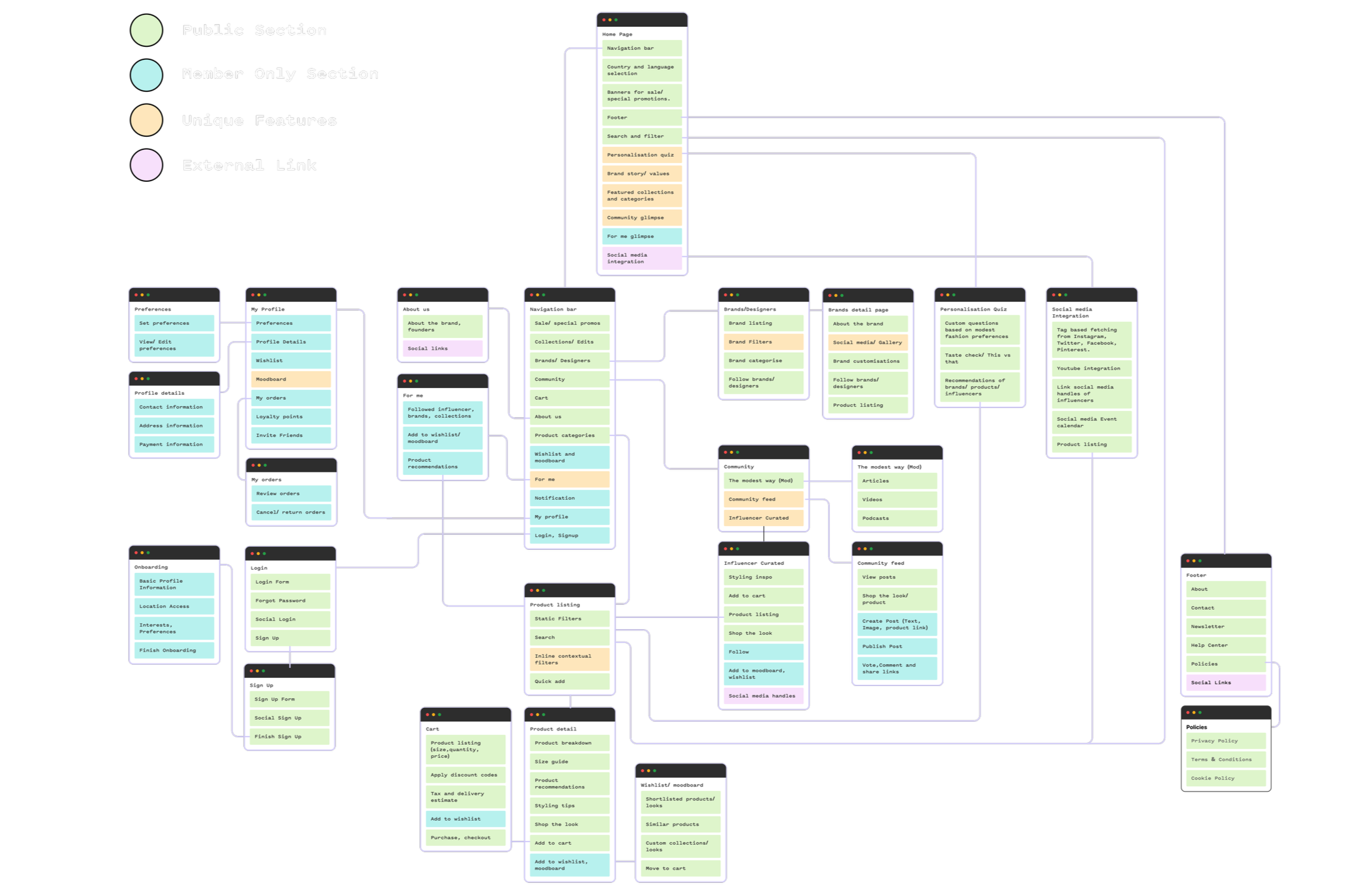
Previously, the product logic was inventory-led. After the pivot, it became marketplace-led. A single garment could now be offered by multiple sellers, each with varying prices, shipping origins, and delivery timelines. This introduced a level of structural density more commonly associated with mass-market platforms than luxury retailers.
The new sitemap was designed to accommodate this complexity without visually signalling it. Public browsing, member-only experiences, influencer-led discovery, and marketplace functionality were organised into a hierarchy that prioritised clarity over feature volume. The architecture ensured that layered functionality remained beneath a controlled surface.
Designing for Discovery
Luxury fashion is rarely purchased through direct search alone. It is discovered through stories, tastemakers, and identity. To support this, we built layered discovery systems that went beyond traditional category browsing.
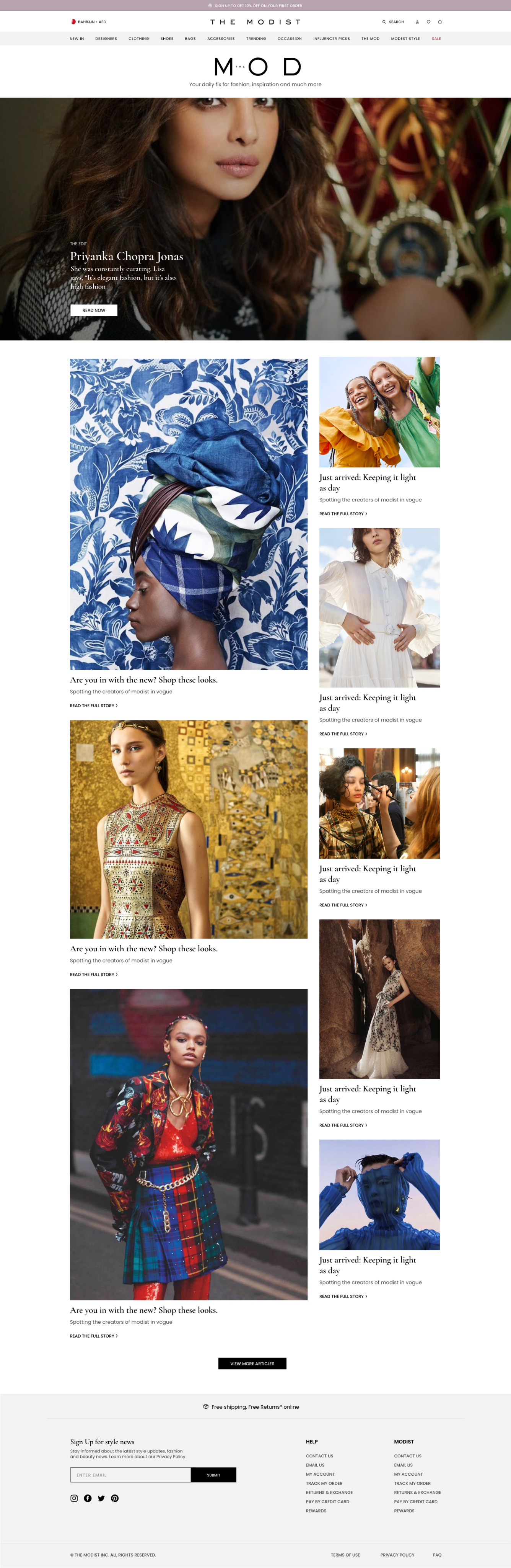
Editorial Layer - The MOD
A magazine-style editorial section blended fashion journalism with commerce. Articles were not isolated content pieces, but had products featured within them that were directly shoppable. Hence, embedding purchase within the narrative.
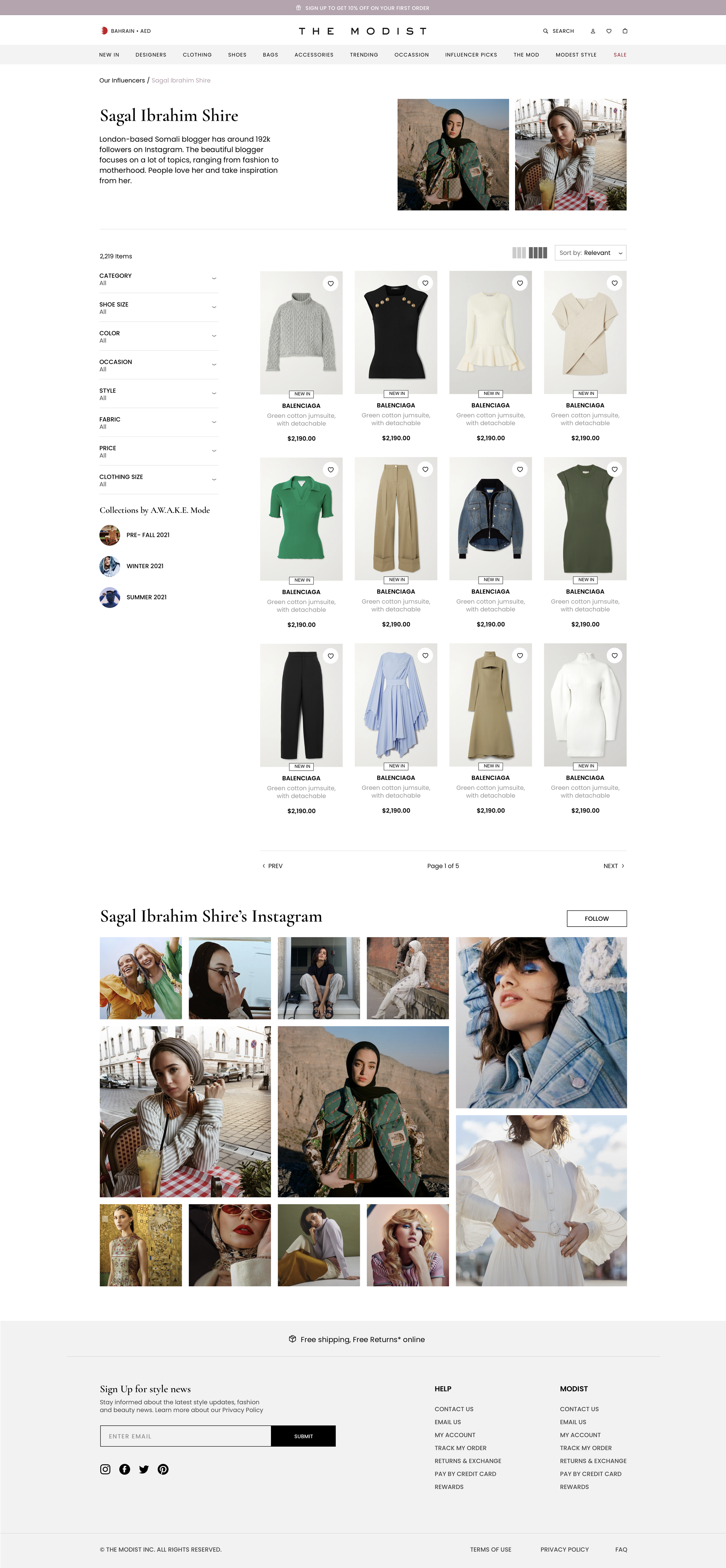
Influencer Closets
Influencers were given curated storefronts showcasing their selections. These pages integrated Instagram feeds, allowing customers to explore products through personal style rather than taxonomy.
This structure transformed trendsetters into navigational anchors by allowing users to explore inventory through personalities they trusted.
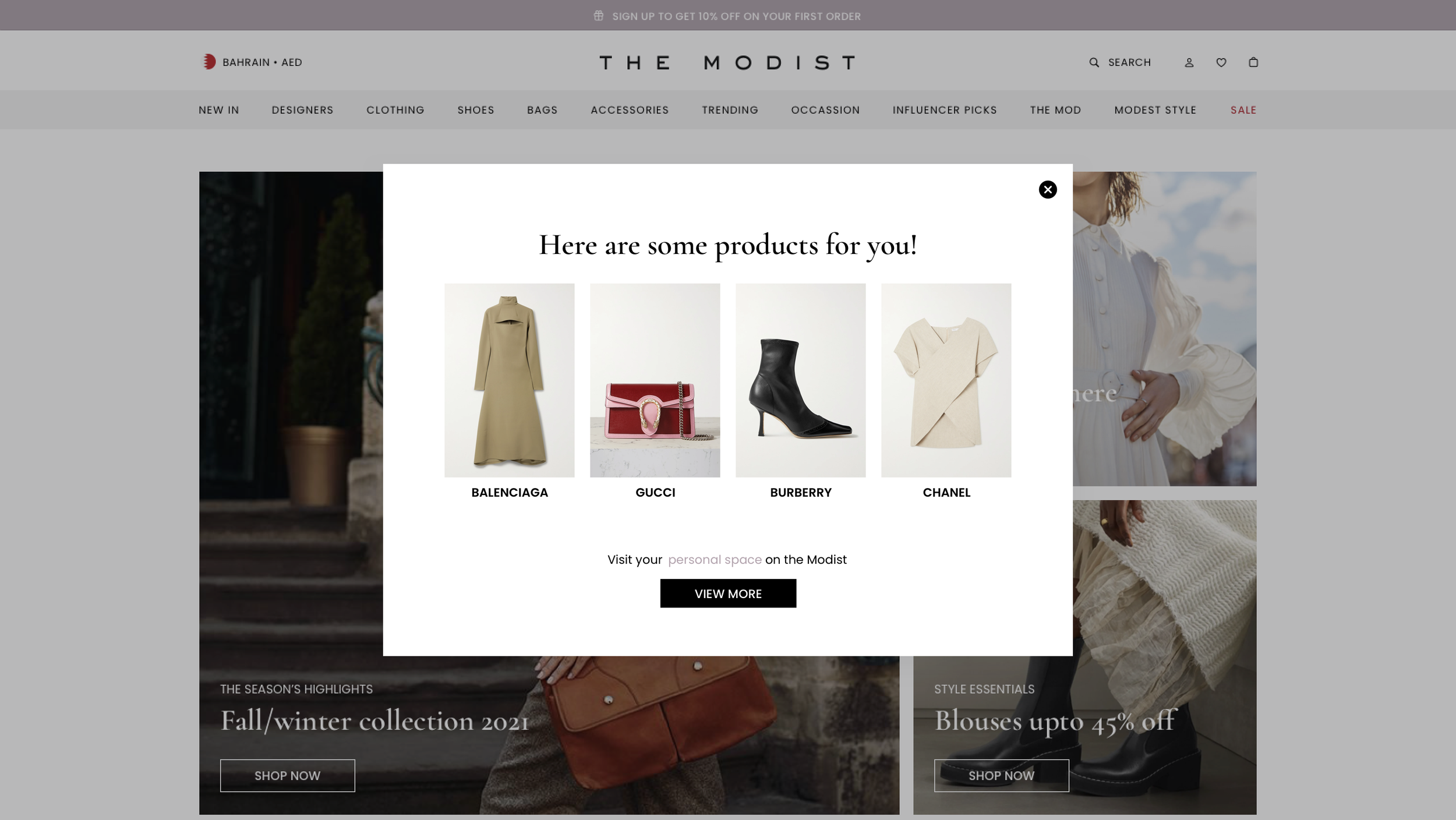
Personalised Continuity
Members could complete a style quiz that informed a personalised “For Me” page, a space that surfaced tailored product recommendations based on preferences and browsing behaviour.
Creating a Luxury Marketplace
Behind the editorial calm sat significant structural complexity.
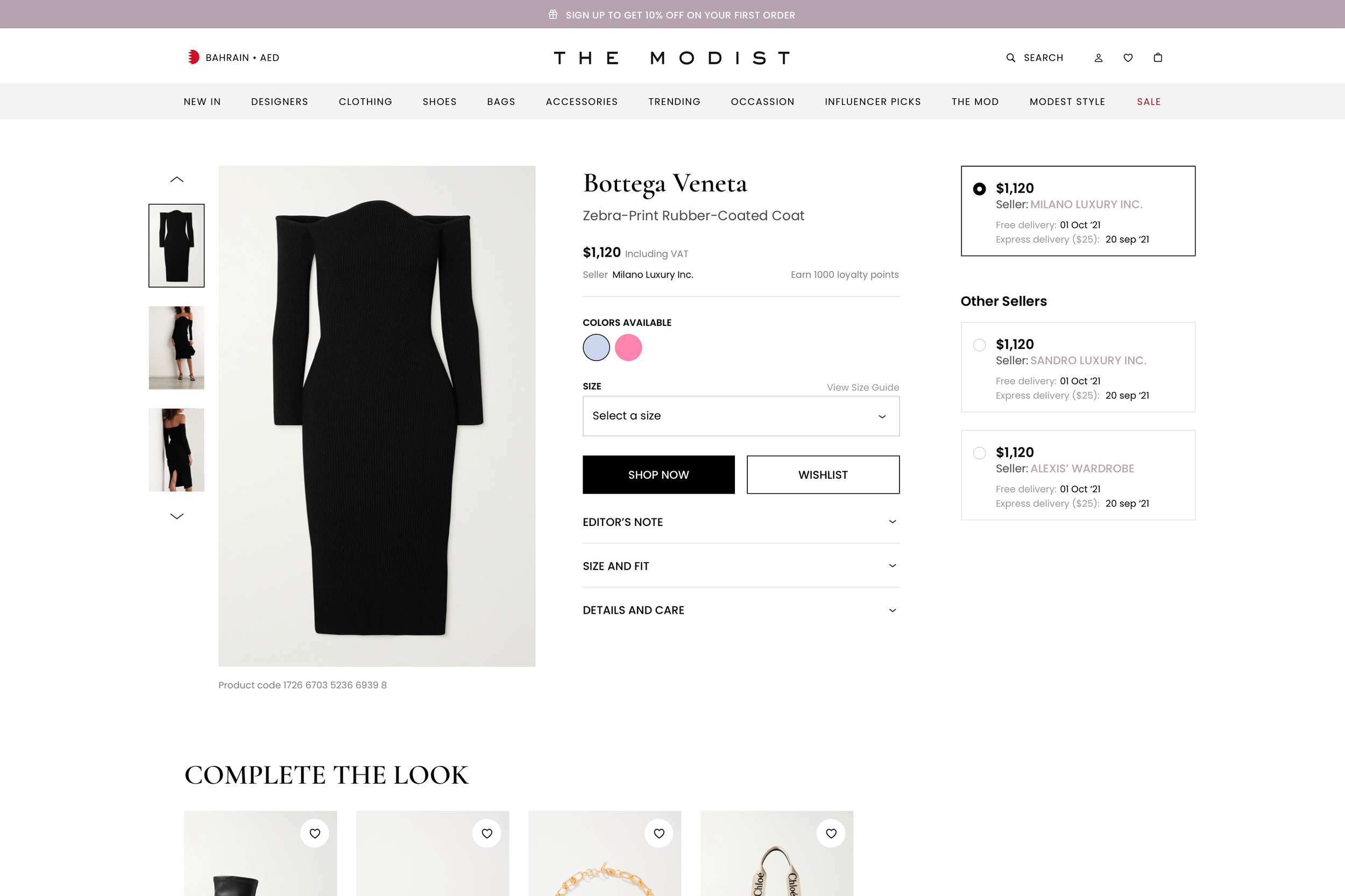
Multi-Seller Product Architecture
Unlike traditional luxury aggregators, products could be sold by multiple sellers, each with varying pricing and shipping origins. The interface needed to present this flexibility without overwhelming the user.
We designed a product architecture that surfaced options clearly while preserving hierarchy and elegance.

Value-Based Filtering
Beyond category and size, users could filter brands and products by sustainability, vegan credentials, and ethical attributes. These filters acknowledged the growing intersection between modest fashion and conscious consumption.
Filtering became identity-aligned, not just functional.
Intelligent Checkout & Commitment
Checkout is one of the most common drop-off points in e-commerce, particularly in cross-border purchases, where duties, taxes, and shipping costs are often revealed late, triggering friction at the moment of payment.
For a global luxury audience, cost transparency had to be built into the structure of the flow itself.
The checkout was designed as a progressive sequence rather than a static form. Identity, shipping, and payment unfold in controlled stages, each collapsing into a summary once completed. A persistent cart remains visible throughout, dynamically updating the subtotal, duties, tax, and international shipping estimates, thereby preventing a cost shock before final confirmation.
Returning customers are recognised immediately upon email entry, transitioning into a welcome-back state that reduces redundant input and accelerates repeat purchases. Account creation is positioned as optional convenience rather than an obligation, preserving autonomy while encouraging retention.
The final payment and confirmation states are intentionally restrained, reinforcing clarity and confidence without visual excess.
Systemisation & Delivery
The relaunch was not only a redesign of interface, but a restructuring of how the platform would scale.
Because development was handled by the client’s internal team, the system required formalisation beyond static screens. A structured component library was created to define interaction states, filtering behaviour, multi-seller modules, checkout logic, and responsive rules. Rather than relying on informal file transfer, I led a formal handoff session outlining system dependencies and implementation logic to ensure continuity between design intent and development.
The platform successfully transitioned from an inventory-heavy customisation model to a scalable curated marketplace. The client expressed strong satisfaction with both the strategic direction and the clarity of delivery.
