Data, Bias & Discourse (2023)
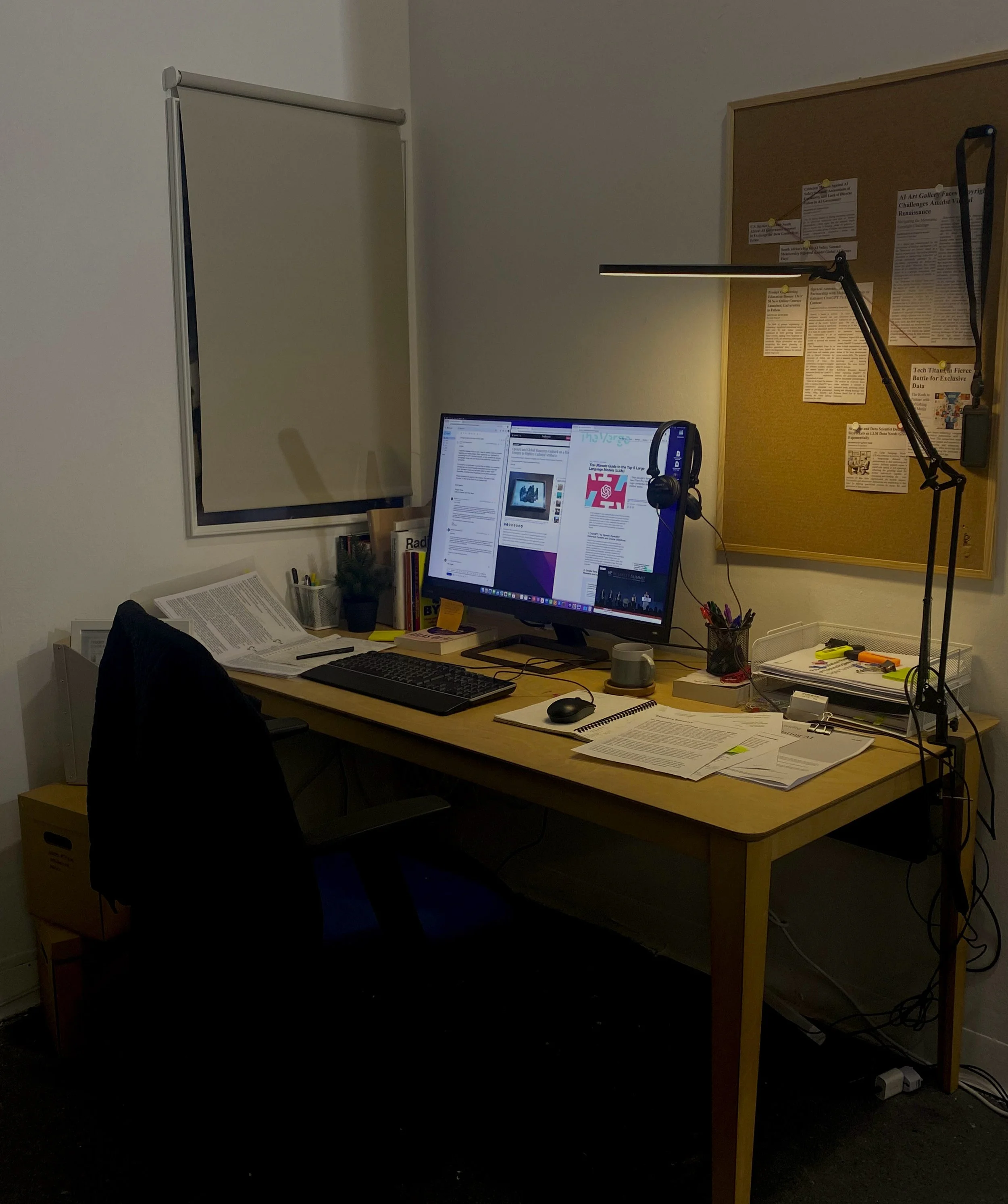
A speculative installation examining artificial intelligence as a cultural object shaped by regulation and media discourse.
Context
As large language models increasingly mediate how information is accessed, summarised, and trusted, artificial intelligence is quietly becoming a primary knowledge infrastructure. At the same time, attempts to regulate AI often frame bias as a technical problem to be resolved through better data, neutral systems, or innovation-friendly policy.
Data, Bias, and Discourse is grounded in a media landscape saturated with AI narratives, where regulation, innovation, and optimism are endlessly rehearsed. The project approaches artificial intelligence not as a neutral or purely technical system, but as a cultural object produced through policy decisions, media routines, and economic interests that shape what becomes knowable, acceptable, and trusted.
The Work
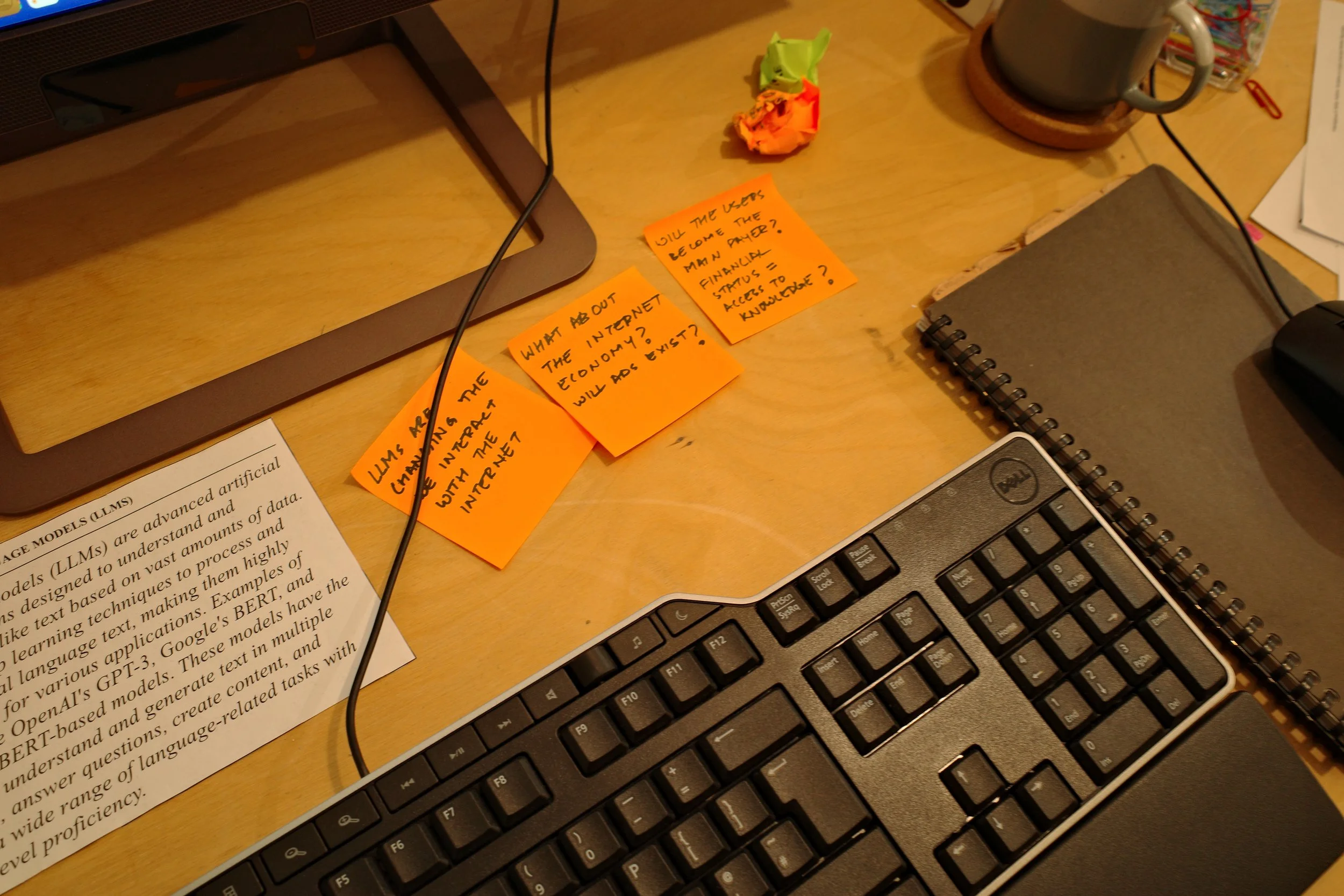
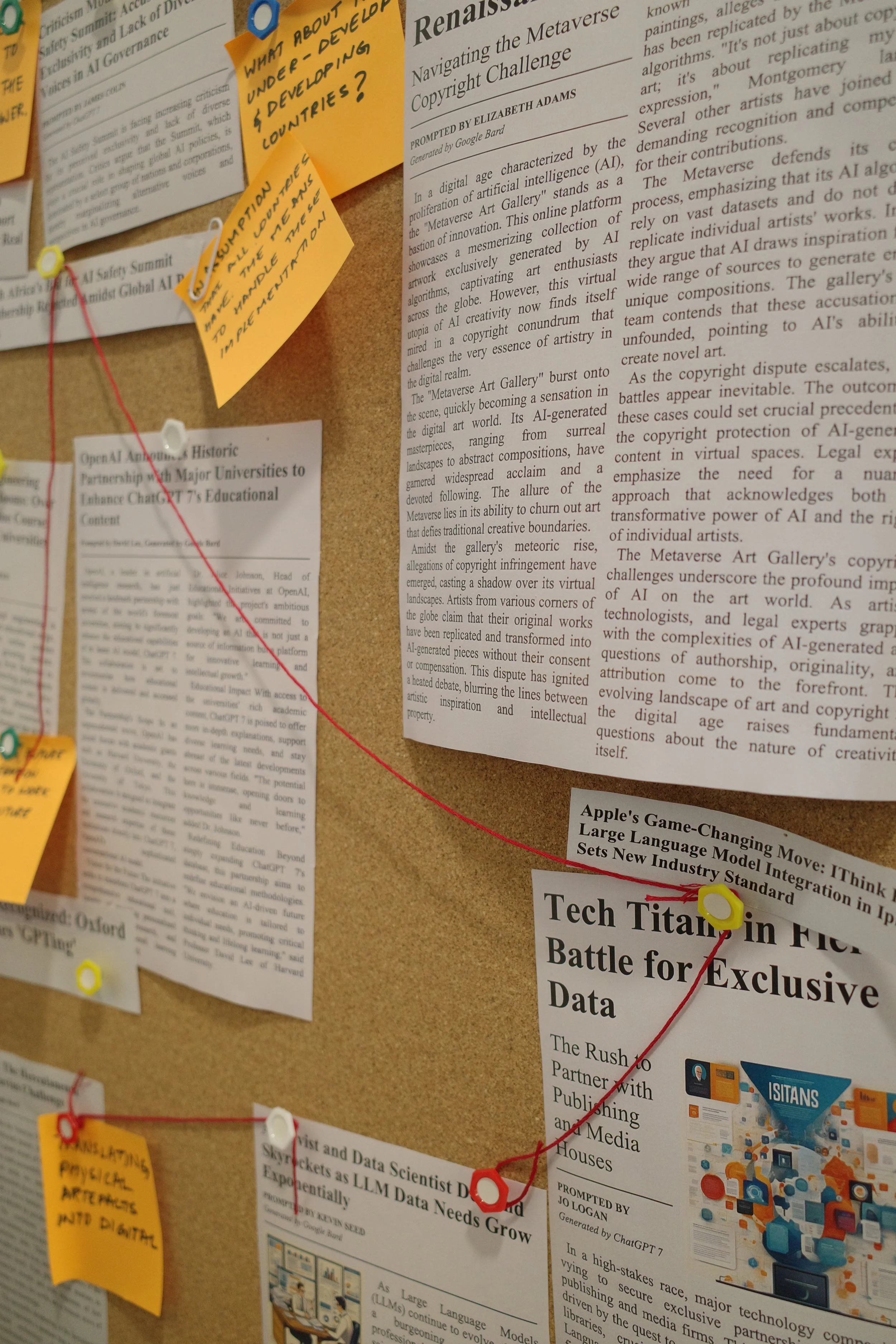
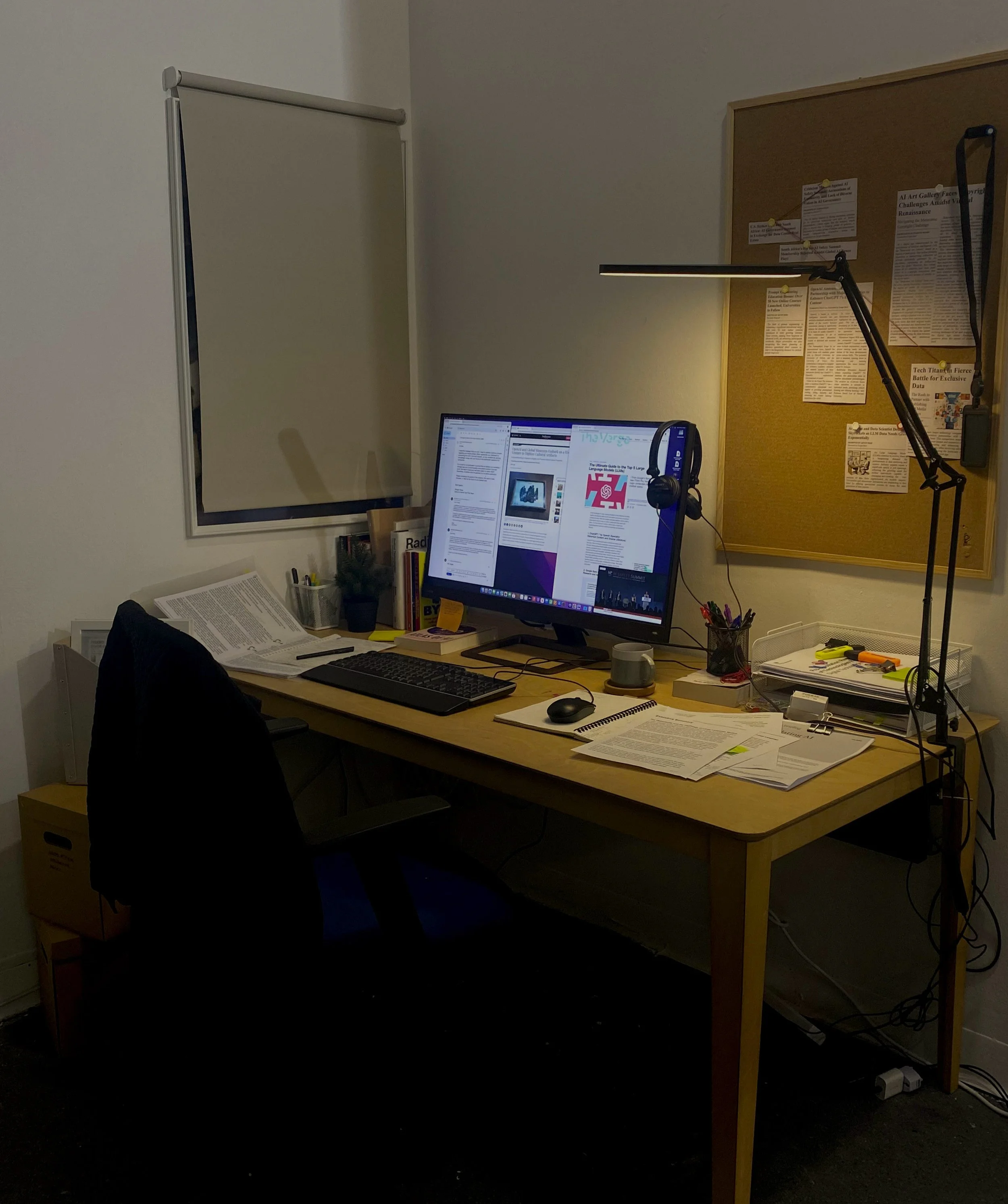
The installation takes the form of a journalist’s desk situated within an undefined near future. The space is populated with documents in various states of completion, including policy documents, regulatory frameworks, email threads, news stories, and fabricated media artefacts.
Visitors are invited to sit with the material and navigate it at their own pace through reading, cross-referencing, and moving between fragments without a prescribed order. Meaning emerges gradually as materials repeat, contradict, and echo one another, mirroring the rhythms through which AI is discussed, reported on, and normalised.
What the Project Reveals
Rather than locating bias within technology itself, the project redirects attention toward the cultural and institutional systems that produce technological legitimacy. It highlights how policy frameworks and media narratives simplify complex systems, shaping public trust while obscuring underlying power relations.
Data, Bias, and Discourse reveals how artificial intelligence often becomes familiar long before it becomes understood. Through repetition, partial explanations can settle into accepted truth, while deeper questions of responsibility and authorship remain unresolved.
Why This Form
Rather than foregrounding artificial intelligence as a technical novelty, the project deliberately adopts a restrained and familiar form. The journalist’s desk shifts attention away from the capabilities of AI tools and toward the cultural systems that frame and legitimise them.
By presenting the work as layered, ongoing research, the installation mirrors the temporal rhythms of contemporary AI discourse, unfinished, repetitive, and continuously in flux. The non-linear structure resists efficient consumption, allowing uncertainty and partial understanding to remain present within this experience.